
Reverse Engineering Is More Than Copying Geometry
Reverse engineering: the starting point when a critical part fails and no drawings, CAD files, or supplier support exist. At Wolfpack Workshop, based in Columbus, Ohio, we specialize in reverse engineering. Through this process, we take a physical component and rebuild it digitally so it can be improved, reproduced, or adapted for modern manufacturing methods like 3D printing. For many customers, this process is the difference between extended downtime and getting equipment back up and running.
In practice, reverse engineering is far more than copying geometry. Reverse engineering is all about:
1. Understanding how a part functions within an assembly,
2. How it interfaces with surrounding components, and
3. What loads or stresses it experiences during use.
Especially for functional parts, geometry alone is not enough, because the design intent matters just as much as the shape.
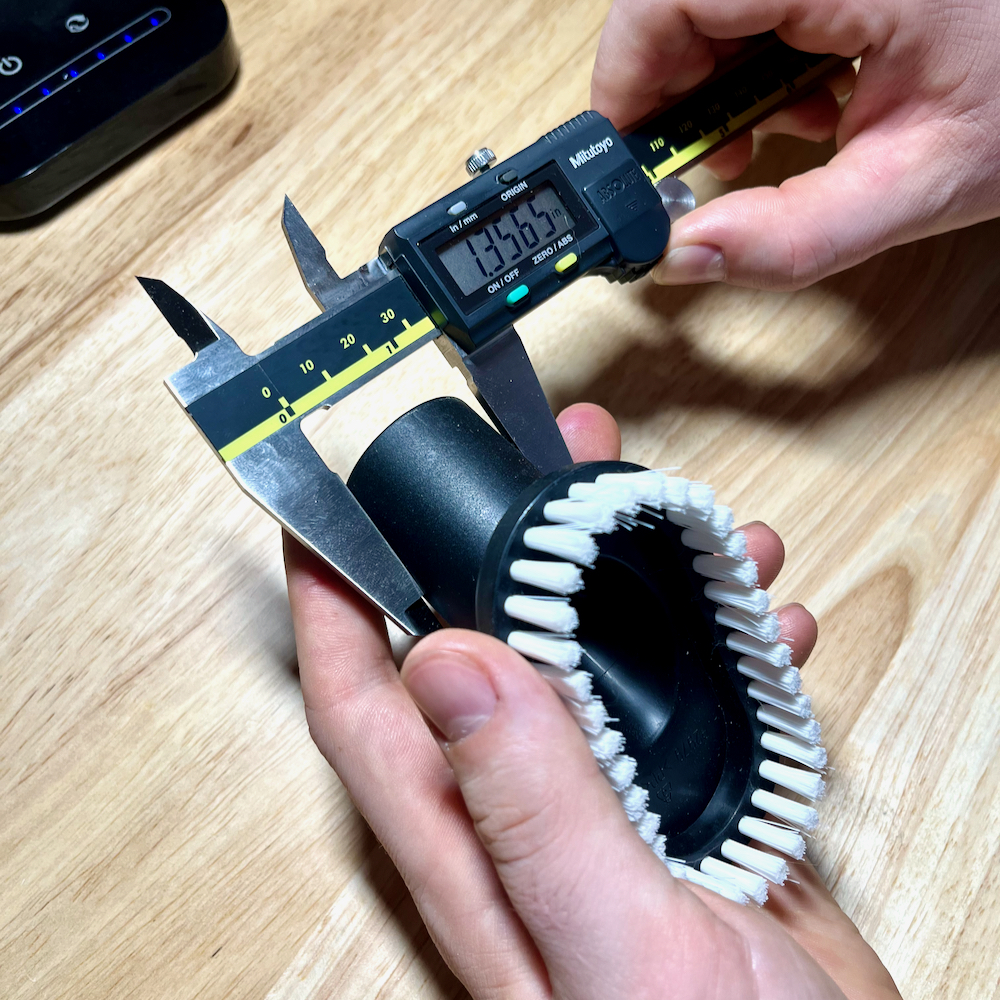
Our reverse engineering process typically begins with careful inspection and measurement of the original part. This can involve the use of calipers, tape measurer, thread gages, and other measurement tools. We also visually analyze failure modes and wear patterns. In many cases, those can tell us exactly where the original design could be improved or reinforced.
Precision Measurement & reconstruction in Solidworks
Accurate measurement is the foundation of any successful reverse engineering project. Depending on the part, this can involve a combination of precision hand tools, 3D laser scanning, and portable CMM measurements to understand critical features. Critical dimensions such as hole spacing, press fits, mating surfaces, and tolerances are identified early, since these directly affect whether the replacement part will function correctly within the larger assembly.
Once the physical measurements are captured, the part is reconstructed in our SolidWorks CAD software with design intent in mind, not just as a static replica. Features are fully constrained, relationships between surfaces are defined, and symmetry or patterning is used where appropriate to ensure consistency and repeatability. This parametric approach allows the model to be easily adjusted for material changes, manufacturing constraints, or future revisions, making the final SolidWorks file a robust engineering asset rather than a one-time solution.
Once the part is recreated in CAD, we evaluate material selection and manufacturing constraints early in the process. Designing for 3D printing often allows us to simplify assemblies, eliminate weak features, or strengthen areas that failed in the original component. This is where reverse engineering and engineering with 3D printing in mind naturally intersect.
Reverse Engineering for Legacy and Discontinued Equipment
A common scenario for those in need of reverse engineering services: legacy equipment with discontinued replacement parts. Rather than redesigning an entire system, reverse engineering allows us to create a drop-in replacement that matches fit and function while leveraging modern materials and production methods. This approach can significantly reduce lead time and cost.
Prototyping, Testing, and Iteration
Reverse engineering also opens the door to customization. Once a part exists digitally, it can be modified to accommodate new requirements, alternative mounting methods, or different operating conditions. What begins as a one-off replacement can quickly become a refined, affordable, and custom solution.
Testing and iteration are key parts of the workflow. Prototypes can be printed, evaluated, and adjusted quickly and cheaply before final production. This iterative loop ensures the final part performs reliably in real-world conditions– not just on a screen.
Reverse Engineering as a Long-Term Engineering Asset
Whether the goal is replacing a broken component, improving an existing design, or preparing a part for small-batch production, reverse engineering provides a practical and flexible path forward. We often share examples of this process on LinkedIn and plan to expand our blog with deeper dives into real-world reverse engineering projects.
Reverse engineering isn’t about copying. It’s about understanding. When done correctly, reverse engineering takes an unknown or unsupported part and transforms it into a documented, manufacturable solution that can evolve alongside your equipment and your business.
Need Reverse Engineering Services? Wolfpack Workshop, based in Columbus, Ohio, is your go-to one-stop-shop for reverse engineering, design, and 3D printing manufacturing services! Contact us today.
follow us on linkedin
Follow my page for 3D Printing insights, tips, and other updates!


